Why WordPress Is Still the Smartest Choice for Most Businesses

There’s always a new platform trending.

New builders.
New frameworks.
New “revolutionary” tools.

And yet, year after year, businesses continue choosing WordPress.

That’s not an accident.

It’s Flexible Without Being Complicated

WordPress allows:

  • Fully custom designs

  • Scalable architecture

  • Marketing integrations

  • Content management without coding knowledge

For service businesses especially, it hits the sweet spot between control and usability.


It’s SEO-Friendly at Its Core

Search engines love structured content.

WordPress allows for:

  • Clean URL structures

  • Metadata control

  • Schema implementation

  • Easy blog publishing

When built correctly, it becomes a powerful long-term SEO asset.


It Grows With You

Many businesses start small — and grow faster than expected.

WordPress can scale:

  • From brochure site to lead-generation engine

  • From local company to multi-location brand

  • From simple pages to advanced integrations

You don’t need to rebuild every time you grow.


The Real Problem Isn’t WordPress

When someone says, “WordPress isn’t good,” it’s usually because:

  • The site was built with bloated themes

  • Too many unnecessary plugins were installed

  • Performance wasn’t optimized

  • Hosting was poor quality

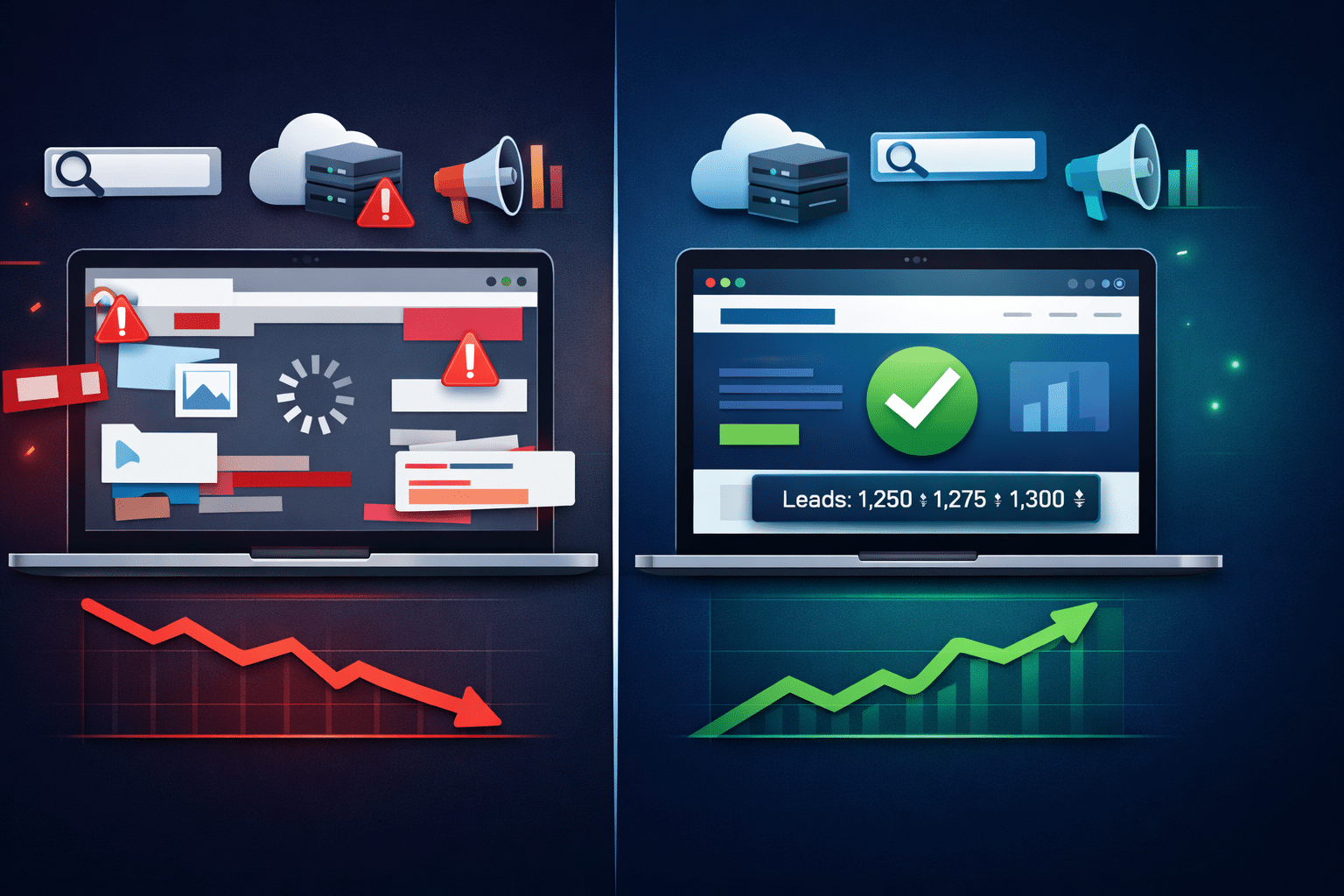
WordPress done poorly performs poorly.

WordPress built strategically performs extremely well.

The difference is in the development.


When It’s the Right Choice

For most small to mid-sized businesses that rely on:

  • Organic traffic

  • Paid ads

  • Content marketing

  • Lead generation

WordPress remains one of the smartest investments available.

Not because it’s trendy.

Because it works.

Why Most Business Websites Fail (And How to Avoid It)

There’s a hard truth most agencies won’t say out loud:

Most business websites fail.

Not because they look bad.
Not because they’re on the wrong platform.
But because they were built without strategy.

A website shouldn’t just “exist.” It should attract, guide, and convert.

Here’s where things usually go wrong.

They’re Built for the Owner, Not the Customer

We’ve seen it too many times — a homepage filled with:

  • “We’ve been in business since 1998”

  • A long company history

  • Internal jargon no customer would ever search for

Your visitors care about one thing:

Can you solve my problem?

A high-performing website speaks directly to the customer’s pain points. It answers questions quickly. It makes the next step obvious.

Clarity converts. Confusion kills conversions.


There’s No Clear Call to Action

If someone lands on your website right now, is it obvious what they should do next?

Call?
Book?
Request a quote?
Download something?

Too many websites leave users guessing.

Every page should guide the visitor somewhere intentionally. Good design isn’t decoration — it’s direction.


The Site Is Slow (And No One Has Noticed)

Speed affects everything.

  • Search rankings

  • User experience

  • Conversion rates

If your site takes 5–7 seconds to load, people leave. It’s that simple.

Performance optimization isn’t optional anymore. It’s foundational.


SEO Was an Afterthought

A website without SEO is like opening a store in the desert.

Search visibility requires:

  • Technical structure

  • Intent-based keyword research

  • Optimized content

  • Ongoing updates

It’s not something you “add later.” It should be baked into the build from day one.


Marketing Isn’t Connected

The biggest issue we see?

The website, ads, SEO, hosting, and analytics are all handled by different people who don’t communicate.

That creates gaps. And gaps cost money.

When your digital presence works as a connected system — website + SEO + ads + tracking — growth becomes predictable.


The Fix

A successful website starts with strategy:

  • Who is the target audience?

  • What action do we want them to take?

  • What objections do they have?

  • How do we make the decision easy?

Design supports strategy. It doesn’t replace it.

If your website isn’t generating consistent leads, it’s not a design issue.

It’s a systems issue.

And systems can be fixed.

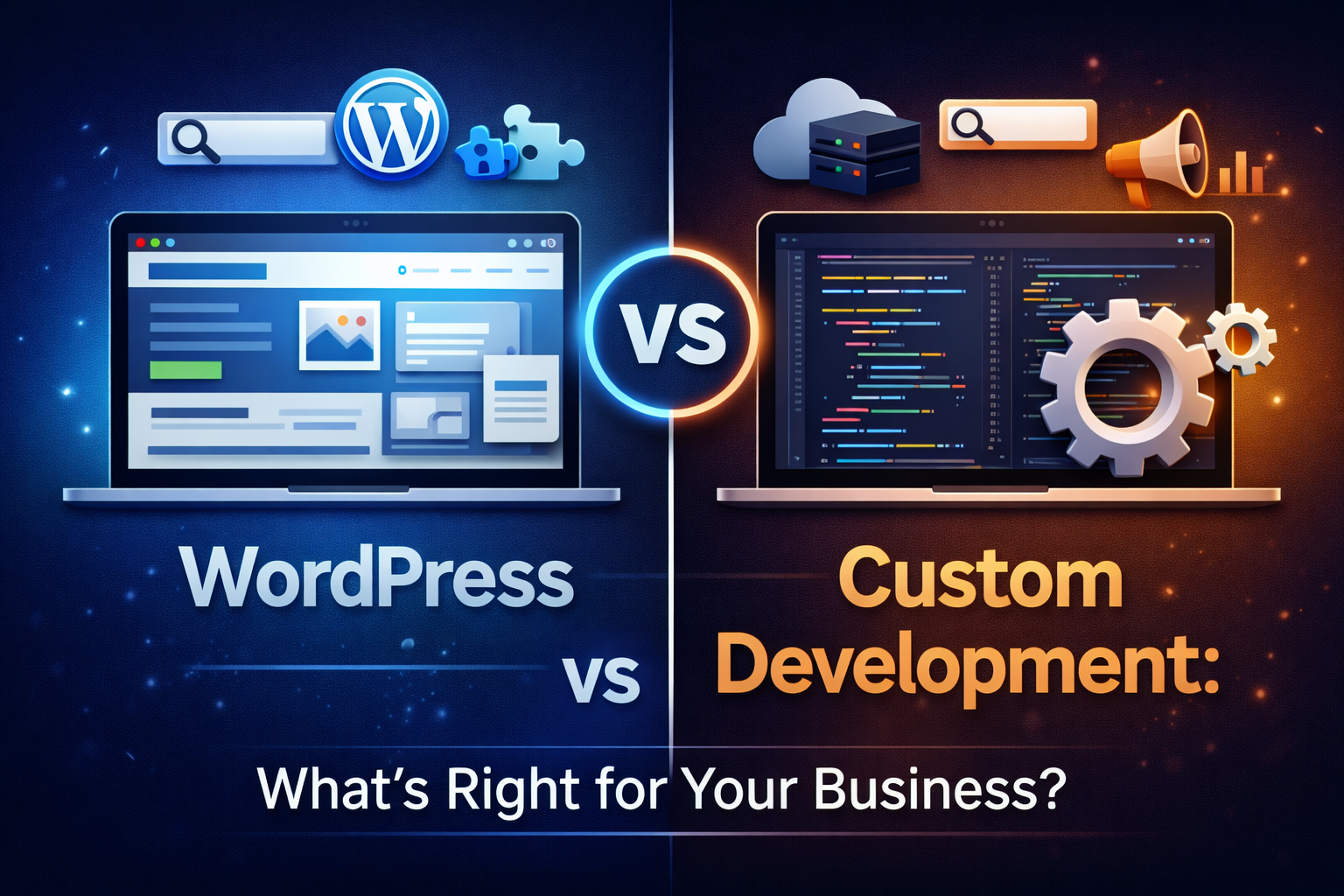
WordPress vs Custom Development: What’s Right for Your Business?

When businesses decide to invest in a new website, one of the first questions they ask is:

Should we use WordPress — or build something fully custom?

The answer isn’t one-size-fits-all.

As an agency specializing in WordPress development, custom website builds, SEO, hosting, and digital marketing, we help clients choose the right foundation based on growth goals — not trends.

Let’s break it down clearly.


What Is WordPress?

WordPress is the world’s most widely used content management system (CMS). It powers over 40% of the internet because it offers:

  • Flexibility

  • Scalability

  • Strong SEO structure

  • Plugin ecosystem

  • Lower development costs

  • Faster launch timelines

For most small to mid-sized businesses, WordPress is more than enough.

But that doesn’t mean it’s always the best choice.


What Is Custom Development?

Custom development typically means building a website from scratch using frameworks or fully bespoke code — without relying on a CMS like WordPress.

This approach is often used for:

  • SaaS platforms

  • Web applications

  • Complex user dashboards

  • Enterprise systems

  • Advanced integrations

Custom builds offer total control — but they come with higher costs and longer development cycles.


When WordPress Is the Smart Choice

For many businesses, WordPress provides the perfect balance between flexibility and efficiency.

✔ You Need to Launch Quickly

WordPress allows faster development timelines.

✔ You Want to Manage Content Easily

Non-technical teams can update pages, blogs, and media without developer support.

✔ SEO Is a Priority

WordPress is built with SEO in mind and integrates seamlessly with optimization tools.

✔ You Want Cost Efficiency

Custom builds require significantly more development hours.

✔ You Need Marketing Integrations

WordPress integrates easily with CRMs, email platforms, analytics tools, and advertising platforms.

For 80% of service-based businesses, WordPress is the right solution.


When Custom Development Makes Sense

There are situations where WordPress may not be ideal.

✔ You’re Building a Web Application

If your website functions more like software than marketing, custom development is usually required.

✔ You Need Highly Complex User Roles or Logic

Advanced permission systems, multi-layer dashboards, or custom workflows may require bespoke architecture.

✔ You Have Enterprise-Level Scale

Very large platforms sometimes require highly optimized custom systems.

✔ You Require Unique Performance Optimization

Some high-traffic systems benefit from extremely specialized infrastructure.


The Biggest Mistake Businesses Make

The real issue isn’t WordPress vs custom.

It’s choosing based on perception instead of strategy.

We’ve seen businesses:

  • Overspend on custom builds they didn’t need

  • Use WordPress incorrectly and blame the platform

  • Hire multiple vendors who don’t coordinate properly

The foundation of your website should match your growth strategy.


Performance Matters More Than Platform

Whether you choose WordPress or custom development, what truly impacts results is:

  • UX/UI design

  • Page speed

  • Conversion optimization

  • SEO structure

  • Hosting environment

  • Marketing alignment

A poorly built custom site will underperform.
A strategically built WordPress site can outperform competitors for years.


Our Approach: Strategy First

We start with:

  1. Business goals

  2. Revenue model

  3. Target audience

  4. Growth projections

  5. Marketing channels

Then we recommend the right build.

Sometimes that’s WordPress.
Sometimes it’s custom development.
Often it’s a hybrid solution.


So, What’s Right for You?

Ask yourself:

  • Is this a marketing website — or a software platform?

  • How often will content need to be updated?

  • What integrations are required?

  • What’s the realistic budget?

  • What’s the 3-year growth vision?

The best website isn’t the most expensive.

It’s the one built for scale, visibility, and conversion.


Ready to Build the Right Way?

If you’re considering a new website — or wondering whether your current platform is holding you back — we can help you evaluate the smartest path forward.

Your website should be a growth engine, not just a digital placeholder.